A high-brightness display terminal is no longer a nice-to-have upgrade. In industrial automation, smart city infrastructure, digital out-of-home (DOOH) media, and premium self-service kiosks, it’s the baseline requirement.
Consider the common failure modes. A screen washes out under direct sunlight. Dust ingress kills the touch sensors. Day-night temperature swings trigger condensation. Each of these problems traces back to one root cause: the display, touch layer, thermal design, and manufacturing process were never engineered as a single coherent system.
Shenzhen Golden Margins Optoelectronics (Golden Margins) built its 65-inch industrial-grade fully-bonded touch assembly specifically to solve this. This article walks through four areas: technical specifications, application scenarios, core manufacturing processes, and the purchasing decision itself.
1. What a True High-Brightness Display Terminal Needs to Deliver
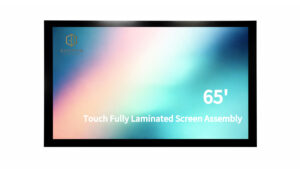
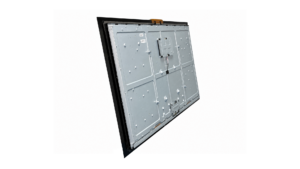
Here are the core specifications of this 65″ touch display assembly (Open Frame module):
| Category | Specification | Notes |
|---|---|---|
| OS support | Windows 7/8/10/11, Linux (Ubuntu/Debian), Android | Runs on mainstream industrial and commercial platforms |
| Resolution | 3840×2160 (4K) | Keeps pixels fine even at this screen size |
| Color depth | 1.07G (8-bit + FRC) | Produces smooth color transitions with no visible banding |
| Viewing angle | 89/89/89/89 (Typ., CR≥10) | Shows almost no color shift at any angle |
| Contrast ratio | 1200:1 (Typ., transmissive) | Balances shadow detail with bright-area punch |
| Brightness | 2000 cd/m² | Delivers the core metric of a high-brightness display terminal — legible under direct outdoor sun |
| Touch | Projected capacitive (PCAP), 10-point | Supports complex multi-finger gestures like pinch-zoom and drag |
| Video interface | V-by-One | Transmits signal at high speed with low EMI |
| Operating temperature | −20°C to 70°C | Covers a wide industrial temperature range |
| Cooling | Passive (aluminum thermal backplane) | Requires no fan and no maintenance |
| Ingress protection | IP65 (front panel) | Resists dust and water |
| Power input | 12V (panel) / 24V (backlight) dual-rail | Isolates the two rails to prevent cross-interference |
Two design details in this spec sheet are easy to overlook. However, both carry real engineering significance.
Why the V-by-One Interface Matters
First, look at the V-by-One high-speed video interface. Compared with traditional LVDS, V-by-One moves more data through each channel. As a result, the display needs far fewer cables and pins to carry a 4K signal at this size. This reduces signal degradation. It also suppresses the electromagnetic interference that high-speed signaling normally creates. Consequently, this matters most for high-brightness display terminals near rail transit systems, EV charging stations, or other electrically noisy environments.
Why Dual-Rail Power Design Matters
Second, consider the 12V/24V dual-rail power design. A 2000 cd/m² backlight draws a large inrush current whenever it switches brightness levels. If the backlight driver shared a single low-voltage rail with the touch sensor and panel logic, that current spike could cause voltage sag. In turn, this would trigger touch drift or logic glitches at the exact moment brightness changes. By isolating the two rails both electrically and physically, the terminal can sustain peak brightness output. Meanwhile, the touch and logic subsystems stay stable.
2. Where High-Brightness Display Terminals Actually Get Deployed
Digital Out-of-Home (DOOH) Media and EV Charging Stations
EV charging networks and smart city infrastructure are expanding fast. Therefore, operators increasingly rely on large-format displays to command premium advertising rates and improve ROI. A common architecture is the “dual-screen split.” One smaller screen handles transactional HMI interactions. Meanwhile, a larger, high-brightness display runs dynamic advertising content on its own.
At 65″, 4K, and 2000 cd/m², this assembly delivers cinema-grade color under direct outdoor sun. As a result, it maximizes ad visibility and dwell time.
Smart Transportation and Public Interactive Kiosks
Unattended public terminals face a tough requirement: they must stay legible in every weather and lighting condition. Think of station wayfinding kiosks, transit stop displays, or tourism information points. Conventional screens often wash out to near-white under midday sun due to specular reflection.
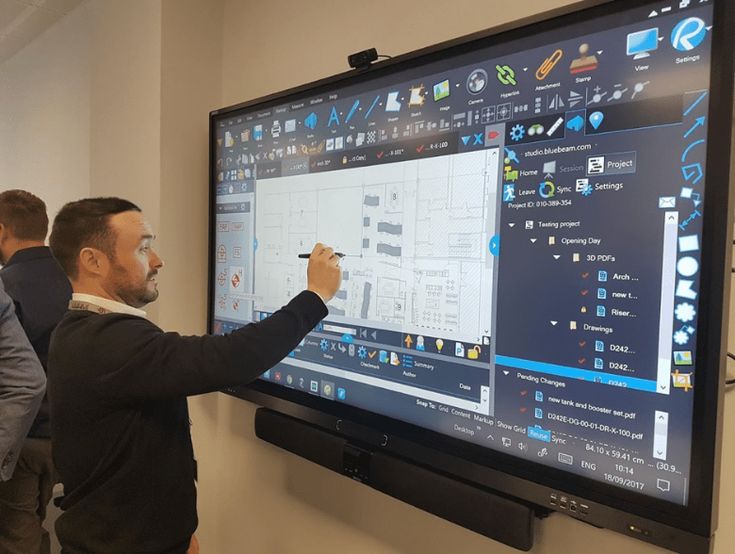
A high-brightness display terminal solves this differently. Its physical luminance stays strong, and its viewing angle approaches 90° in every direction. Therefore, it remains readable for pedestrians regardless of their angle to the screen. Meanwhile, 10-point capacitive touch keeps map zooming and information queries responsive.
Dusty, Corrosive Industrial Environments
Thermal management is the hardest engineering problem at this brightness level. Most displays at comparable brightness rely on fans for active cooling. However, fans also pull in dust, moisture, and corrosive particulates from the surrounding environment. Over time, this leads to circuit corrosion, fan failure, and frequent unplanned downtime.
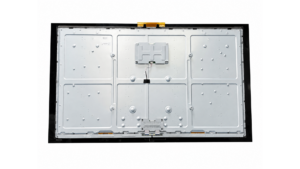
This assembly takes a different approach: fanless passive cooling. It conducts heat away through an aluminum/magnesium alloy back cover and cooling fins. Because no vents are needed, the enclosure stays fully sealed. The front panel achieves IP65 protection as a result. Consequently, the unit can run continuously in metallurgical plants, dusty mine control rooms, or sandy and rainy outdoor regions across the full −20°C to 70°C range.
3. The Manufacturing Processes Behind the Brightness
Turning an impressive spec sheet into a reliable commercial asset comes down to one thing: manufacturing discipline.
Liquid Optical Clear Adhesive (LOCA/OCR) Bonding
Traditional air-gap bonding leaves a layer of air between the cover glass and the LCD panel. Light crosses multiple refractive-index boundaries as it passes through. This degrades brightness and reduces outdoor contrast. It also leaves the assembly vulnerable to fogging and dust from thermal cycling.
Full optical bonding solves this by filling that gap with optical adhesive. As a result, it delivers three concrete benefits:
- Better optical performance: reflectance drops from roughly 10% (typical air-gap bonding) to under 1.5%. Consequently, outdoor contrast loss stays below 5%.
- No parallax: with no physical gap, the touch point and the underlying pixel stay visually aligned. Therefore, mis-touches drop significantly.
- Stronger mechanical resilience: the cured adhesive layer acts as a shock absorber. This improves the fracture resistance of large-format glass.
Wacker (Germany) Silicone Optical Adhesive
A high-brightness display terminal runs for long periods under intense backlight heat. Outdoors, it also takes direct UV exposure. Standard acrylic-based OCA adhesives tend to yellow under UV. They can also delaminate or bubble as they expand and contract with temperature.
A premium silicone-based optical adhesive avoids these problems. It resists UV and heat, staying clear and non-yellowing under prolonged exposure and thermal aging. Its cure shrinkage stays below 1.0%, so it minimizes mechanical stress on large-format glass. Additionally, it maintains stable viscoelastic properties from −40°C to 110°C. Therefore, it absorbs both thermal deformation and physical shock.
Class 100 Cleanroom Manufacturing
Optical bonding demands an extremely controlled production environment. A single microscopic dust particle sealed inside the bonded layer can diffract light into a visible bright spot under strong illumination. This effectively scraps a high-value display unit.
For this reason, this product line is manufactured in a 1,600 m² Class 100 cleanroom. The facility runs precision temperature and humidity control, static elimination systems, and real-time particulate monitoring. As a result, every high-brightness display terminal leaves the factory built to a genuinely clean standard.
4. How It Compares to Conventional Touch Displays
| Dimension | Fully-Bonded High-Brightness Terminal | Conventional Frame-Bonded / Air-Gap Touch Display |
|---|---|---|
| Bonding structure | Liquid optical bonding, no air gap | Frame-bonded with adhesive tape, air gap in between |
| Optical reflectance | ≤1.5% | 10%–15% |
| Sealing / anti-fogging | Fully sealed | Edge tape degrades over time; fogging and shorts follow |
| Impact resistance | Glass and adhesive absorb shock together | No cushioning from the air gap; impact resistance stays weak |
| Cooling method | Fanless passive cooling, silent and dust-free | Active fan cooling; dust ingress and failure follow |
| Video interface | V-by-One (high-speed) | LVDS; noise immunity stays weaker |
| Long-term operating cost | Higher upfront cost, lower lifetime failure rate | Lower upfront cost, higher repair frequency over time |
From a total cost of ownership (TCO) standpoint, the purchasing decision shouldn’t stop at the sticker price. Instead, it should also weigh mean time between failures (MTBF), revenue lost to downtime, and long-term maintenance costs.
5. The Bottom Line: You’re Buying a System, Not Just a Screen
For system integrators, choosing a high-brightness display terminal is really an investment. It’s an investment in a human-machine interaction system that needs to keep working, unattended, for years.
Golden Margins backs this claim with a vertically integrated model. The company handles R&D, industrial design, manufacturing, and sales under one roof. It also supports every product with full material inspection, extreme temperature and humidity aging tests, and certifications including CE, FCC, and 3C.
Whether the deployment site is a sand-blasted desert kiosk, a salt-fog-corroded port facility, or an industrial cleanroom with strict particulate requirements, the standard stays the same. A genuinely capable high-brightness display terminal should run continuously — without a fan, and without frequent maintenance — through every interaction it’s asked to handle.
Get in Touch with Golden Margins
Looking for a high-brightness display terminal built for your specific environment? Our engineering team can help you match the right specification, customization, and certification package to your project.
Contact us at sales@goldenmargins.com or call +86 755 23191996 to request a quote, request samples, or discuss a custom configuration for your deployment.